The host and the night
Chief Sielu: who he is and what to expect
Who Chief Sielu is, what the Samoan fire-knife dance is, and the practical side: length, language, children, ID, drinks and wheelchair access.
See Chief's Luau tickets on GetYourGuide ↗Quick answer
Chief Sielu Avea is a Samoan-born entertainer who became the first World Fireknife Dance Champion in 1993 and has produced and hosted Chief's Luau on Oahu since 2012. Expect a comedy-led evening of about three hours, hosted in English: hands-on activities, a buffet, a live show and a fire-knife finale. It takes place in Kapolei, on the west side of Oahu, not in Waikiki.
Chief Sielu in brief
| Detail | |
|---|---|
| Born | Samoa |
| Moved to Oahu | 1981, to study at BYU–Hawaiʻi |
| First world title | World Fireknife Dance Champion, 1993 |
| Polynesian Cultural Center | Performed there until 2002 |
| Chief's Luau | Producer and host since 2012 |
Who Chief Sielu is
Chief Sielu Avea was born in Samoa and moved to Oahu in 1981 to study at Brigham Young University–Hawaiʻi. He studied mathematics and worked part time at a nearby cultural museum, where he developed his entertaining style. He taught himself fire-knife dancing and performed regularly at the Polynesian Cultural Center in Lāʻie until 2002. His own site says he is known as the Coconut Man for his twenty years there, and as an ambassador of Polynesia. Wikipedia adds that Samoa's head of state awarded him a high chief title.
The 1993 title and his other credits
In 1993 he became the first World Fireknife Dance Champion. The World Fireknife Championships are held at the Polynesian Cultural Center in Lāʻie. In 2002 he threw the flaming spear that lit the ceremonial torch at the Stadium of Fire event before the Salt Lake City Winter Olympics opening ceremony. He has appeared on The Oprah Winfrey Show, The Tonight Show, MTV and BBC television, and he starred in the short film Chief, shown at the 2008 Sundance Film Festival. In 1994 he published a book on Samoan tattooing.
What the fire-knife dance is
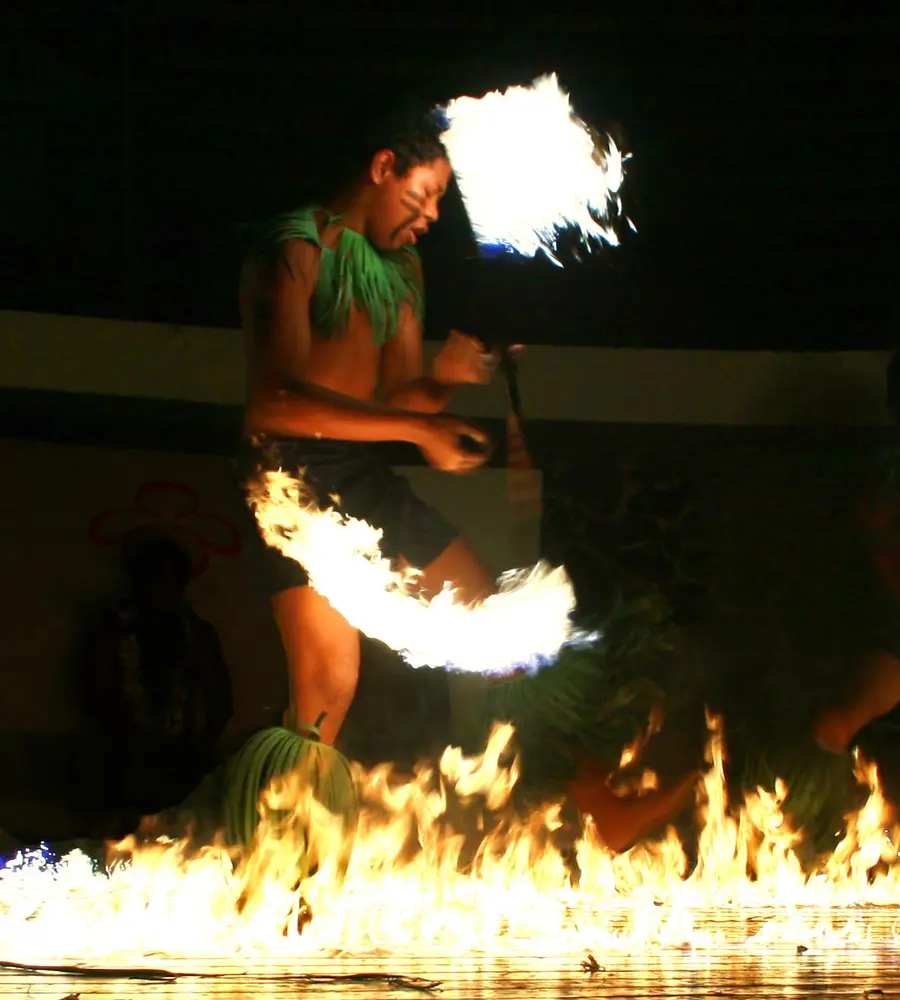
In Samoa the dance is called siva afi, and a related older Samoan name is ailao afi. The fire knife is a traditional Samoan implement used in ceremonial dances. It began as a machete wrapped in towels at both ends, with part of the blade left bare in the middle, and the towels are set alight. The dancer spins, throws and catches it while moving. The ticket describes the finale as fire-knife dances of about ten minutes by a group of eight. Neither the operator nor the ticket names who dances on a given night, so treat the champion as your host, not as a promise of the finale.
How the luau came to Kapolei
Chief Sielu performed at Honolulu comedy clubs in the late 1980s, and in 2012 he and the club's founders, Eddie and Charlotte Sax, created Chief's Luau. It ran at Sea Life Park from May 2012 until December 2017, then moved to Wet'n'Wild Hawaii in Kapolei, to a private section of the park that Wikipedia says he designed himself. Older reviews and photos online may show the Sea Life Park site, so check the address in your booking. The current address is 400 Farrington Highway.
Read next: Getting to Kapolei for Chief's Luau: pickup, parking and timing
Comedy first, dance second
The operator's site calls him the best and funniest Polynesian entertainer in the South Pacific, and the show is built around that. Wikipedia describes his early routine as comedy joined to coconut husking and fire making, and says he has described the show as unscripted. Expect the host to talk to the crowd between dances. The ticket also lists a hula lesson and an imu ceremony, the underground oven ceremony, among the activities. If you want a quiet, reverent presentation of Polynesian culture, a different evening may suit you better.
How long it lasts and what happens
The ticket's listed duration is 195 minutes, about three hours and fifteen minutes, and it asks you to arrive 20 minutes before the activity starts. The evening opens with hands-on activities such as headband weaving, tattooing, spear throwing and fire-making, followed by a buffet and a live show of Polynesian island dances. The ticket's description also mentions a hula lesson and an imu ceremony. Your confirmation and the booking calendar show the times. This guide does not quote clock times, because they change.
Language: what you will follow
The ticket lists English as the language of the host. Much of the hosting is spoken comedy, so the jokes depend on your English. The dancing and the fire-knife finale need no translation. If you speak little English, you will still follow most of the evening, but you may miss some of the humour. The operator's contact page lists an email address for questions before you book.
Children, ID and drinks
The operator's site lists children aged 4 and under as free, with their own seat and plate of food. It sells youth tickets for ages 13 to 20 and child tickets for ages 5 to 12. On the operator's coach, children 4 and under ride as lap children and may not have their own seat. Alcohol is served only to guests aged 21 or over, and the ticket asks you to bring a passport or another photo ID. The operator publishes no guidance on how the fire finale suits very young children, so ask before you book if yours startles easily.
Wheelchair access and other needs
The ticket is listed as wheelchair accessible. The operator says all areas of the venue are accessible by wheelchair, including entrances, restrooms and seating, and that it uses specific tables for wheelchairs, so add a note in the comments box when you book. It offers sign-language interpretation if you ask in advance by calling its office, welcomes service animals, and asks for 48 hours' notice if you need a coach with an accessibility lift.
Other ways to see fire-knife dancing
If the dance is what you want most, you have options beyond a luau dinner. The Polynesian Cultural Center in Lāʻie holds the World Fireknife Championships once a year, with competitors from around the world, and its championship website lists the schedule and sells tickets. The Center also stages an evening show, HĀ: Breath of Life, and its schedule has put the men's final inside that show. Other Oahu luaus end with a fire-knife finale too, including Ka Moana at Aloha Tower. Chief's Luau is the one built around its champion host.
Who this isn't for
If you need commentary in your own language, the English-led hosting will not give you that. If you want a formal, quiet cultural programme, the comedy will get in the way. If you want to watch fire-knife dancers compete, the Polynesian Cultural Center holds the World Fireknife Championships, which are a separate event. And if you do not want to leave Waikiki after dark, you will need to take the coach or drive out to Kapolei.
Frequently asked questions
Who is Chief Sielu?
Chief Sielu Avea is a Samoan-born entertainer and the first World Fireknife Dance Champion, in 1993. He performed at the Polynesian Cultural Center until 2002 and has produced and hosted Chief's Luau since 2012.
Is the show in English?
Yes, the host speaks English, and much of the evening is spoken comedy. The dancing and the fire-knife finale need no translation, but visitors with limited English may miss some jokes.
How long does Chief's Luau last?
The ticket lists 195 minutes, about three hours and fifteen minutes. It asks you to arrive 20 minutes before the activity starts. The booking calendar and your confirmation show the exact times.
Is the fire-knife dance from Samoa?
Yes. The fire knife is a traditional Samoan implement, and the dance is called siva afi in Samoa. It began as a machete wrapped in towels at both ends, with the towels set alight.
Can children go to Chief's Luau?
Yes. The operator lists children aged 4 and under as free, with their own seat and plate of food, and sells youth and child tickets by age. Check the age options on the booking page you use.
Is Chief's Luau wheelchair accessible?
Yes. The operator says all areas of the venue are accessible by wheelchair and that it sets aside specific tables, so add a note when you book. It asks for 48 hours' notice for a coach with a lift.
Sources